

Palm Desert Air Balancing for Commercial HVAC Systems
Our team provides expert Palm Desert Air Balancing services for light commercial and industrial HVAC systems. Each project is closed out with a certified TAB report upon completion.
- Commercial HVAC Balancing
- Kitchen Hood Testing
- Fume Hood Airflow Testing
- Certified Reports
NCI Certified
TAB Professional
Measured Results
Airflow Specialists
Servicing All of
Riverside County
Certified Reports
Palm Desert Compliant
Commercial Air Balancing Services in Palm Desert
Depending on what is installed, air balancing in Palm Desert may involve air-conditioning systems, outside-air ventilation, kitchen exhaust and makeup air, fume hoods, room pressure relationships, or airflow troubleshooting. These are the primary services Vortex provides for local commercial projects:

HVAC Air Balancing
We measure commercial supply, return, outside, and exhaust airflow and adjust accessible components toward the values shown on the Palm Desert project plans.

Restaurant Hood Certification
Kitchen exhaust and makeup air are tested with the surrounding HVAC system to verify the Palm Desert restaurant is operating as a complete ventilation system.

Fume Hood Testing
We record fume hood face velocity and airflow direction to document performance under the conditions present during testing.

Room Pressurization Testing
Airflow direction and pressure relationships are measured between controlled rooms and nearby spaces to verify the intended condition.

Airflow Diagnostic Testing
Diagnostic measurements help distinguish airflow balance problems from equipment, control, duct, or installation limitations.
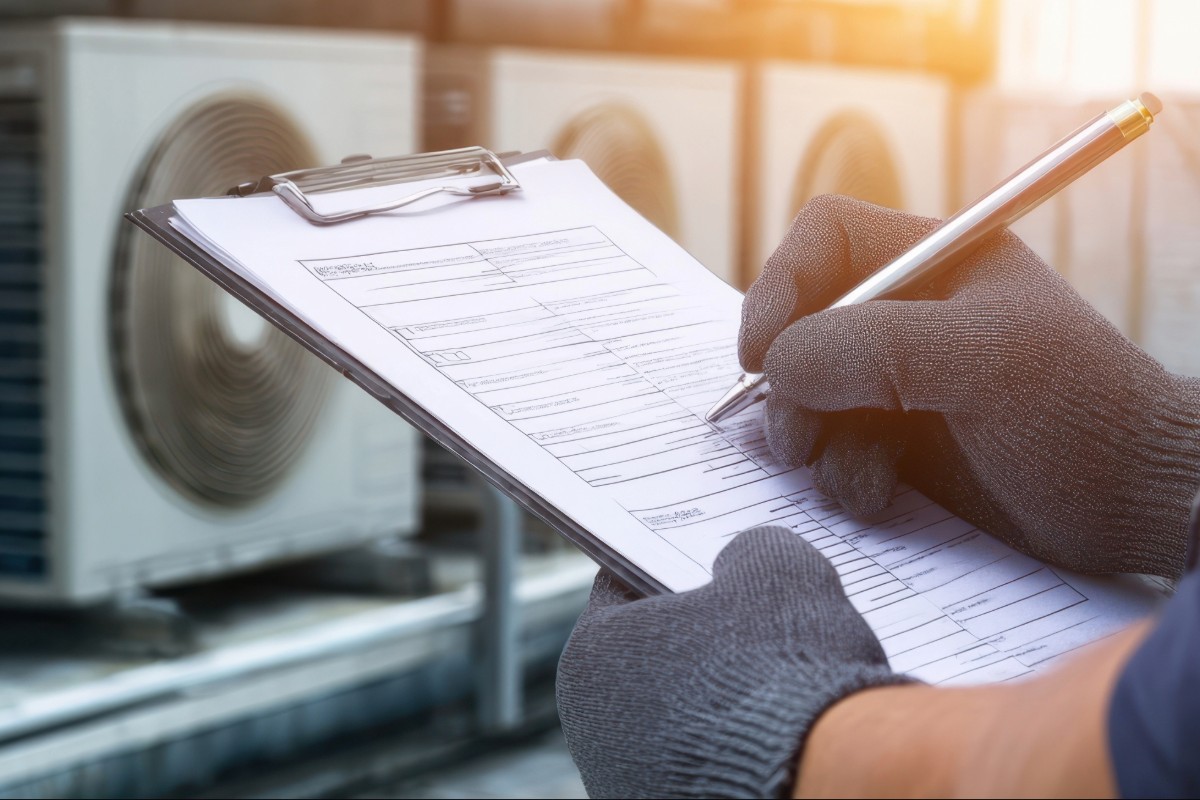
Certified Air Balance Reports
Each Palm Desert air balance report records the equipment tested, design targets, measured results, and relevant observations from the visit.
Is Your Palm Desert Project Ready for Air Balancing?
A smaller, fully operational HVAC system may qualify for testing and reporting in one visit. Send Vortex the plans and project details to confirm availability.

Air Balancing Requirements in Palm Desert
Requirements for Palm Desert air balancing may come from California building standards, local amendments, approved mechanical plans, engineer notes, project specifications, permit comments, acceptance-testing documents, or inspector direction. These sources establish which systems require testing and what the final air balance report must include.
Why Is Air Balancing Required for Palm Desert Projects?
The City of Palm Desert enforces California building standards that include testing, adjusting, and balancing provisions for qualifying commercial HVAC systems. Depending on the permit history and project scope, the requirement may be connected to CALGreen, the California Mechanical Code, the Energy Code, local amendments, the mechanical design, or instructions from the reviewing agency.
But why do these standards consider air balancing important? Simply installing an AC system does not prove that the correct airflow is reaching the building. Equipment can turn on and appear functional while delivering too little outside air, excessive exhaust, uneven room airflow, incorrect pressure relationships, or less cooling than the design intended.
Those problems carry more weight in Palm Desert’s hot climate. Low or poorly distributed airflow can make the AC run longer, increase energy use, place additional strain on equipment, and leave rooms uncomfortable even when the thermostat appears satisfied. Proper testing helps uncover those issues before they lead to years of high utility bills, repeated service calls, or premature equipment problems.
CALGreen’s nonresidential provisions require testing and adjusting for qualifying new buildings and systems. Its HVAC balancing provision calls for a new space-conditioning system to be balanced before normal use and recognizes TABB, NEBB, AABC, or another procedure accepted by the enforcing agency. It also calls for a signed final report after testing and balancing are complete.
What Building Code Standards Does Palm Desert Use?
Palm Desert’s public Building & Safety and plan-review information currently identifies the 2022 California Building Standards Code set, including the 2022 California Mechanical Code, Energy Code, and Green Building Standards Code, together with the Palm Desert Municipal Code. Because the applicable code cycle can depend on the permit and approval history, the project team should confirm the governing standards with Palm Desert Building & Safety and the approved construction documents.
Reference: City of Palm Desert, Building & Safety and Submit a Permit for Plan Review.
Who Can Perform Commercial Air Balancing in Palm Desert?
Certified air balancing in Palm Desert should be completed by trained personnel who understand how to measure, adjust, verify, and document commercial HVAC and ventilation systems.
Depending on the project documents and enforcing authority, recognized qualifications may include certification through NEBB, TABB, AABC, NCI, or another organization accepted for the work. Vortex uses NCI-certified technicians and calibrated testing instruments to record system performance, complete accessible adjustments within the approved scope, and prepare the certified air balance report.
Why does that certification matter? Changing one damper or fan setting can affect much more than a single air outlet. A qualified technician must understand the relationship between supply air, return air, outside air, exhaust, makeup air, fan performance, and room pressure throughout the building.
When Is Air Balancing Commonly Required in Palm Desert?
A Palm Desert mechanical inspector, environmental health inspector, fire authority, building department, or another reviewing agency may request certified air balancing when the performance of an HVAC or ventilation system needs to be verified.
That request may follow a new equipment installation, AC replacement, duct alteration, restaurant remodel, kitchen hood installation, tenant improvement, change in exhaust or outside-air quantities, or the creation of a pressure-controlled room. It may also arise during a reopening inspection, business-name change, transfer of ownership, or random health inspection.
Does every ownership transfer automatically require a new Palm Desert air balance report? No. However, ownership and name changes can reopen an inspection process. If the reviewing inspector cannot confirm how the existing HVAC, kitchen exhaust, or makeup-air system performs, updated testing may be requested.
What Can Trigger Kitchen Hood or Fume Hood Testing in Palm Desert?
Restaurant air balancing in Palm Desert may be called out after a new hood installation, renovation, equipment replacement, ownership transfer, business-name change, reopening inspection, or health department visit.
Inspectors may request testing of the kitchen exhaust, makeup air, transfer air, and dining-area HVAC together. Why test the whole system? Because even when the hood removes smoke at the cooking line, the restaurant can still experience hard-to-open doors, odors, drafts, uncomfortable dining areas, or excessive negative pressure if the surrounding airflow is not working correctly.
Fume hood testing may be requested after a new installation, relocation, exhaust-system modification, equipment change, or facility inspection. The exact measurements should follow the approved design, equipment specifications, agency comments, and operating requirements established for that Palm Desert project.
The Palm Desert Air Balancing Process
Every Palm Desert air balancing project is different, but these core steps remain consistent from plan review through final reporting.

Project Preparation
We review the mechanical plans, equipment schedules, control notes, and design airflow before arriving onsite.

Initial Site Visit
The technician confirms equipment operation, control settings, system access, and conditions that may affect accurate testing.

Testing
Airflow is measured at the main equipment, outside-air intake, exhaust systems, supply outlets, and return grilles included in the scope.

Adjusting
Accessible dampers and approved fan settings are adjusted toward the airflow values shown on the Palm Desert mechanical plans.

Final Verification
Important readings are repeated to confirm system totals, individual outlet performance, exhaust airflow, and pressure relationships.

Certified Reporting
Final measurements, adjustments, and field observations are organized into a project-specific Palm Desert air balance report.
Why Is Air Balancing Important for Palm Desert Buildings?
Air balancing in Palm Desert confirms how the completed HVAC and ventilation systems perform under actual operating conditions. The results can help improve airflow distribution, outside-air delivery, exhaust operation, temperature consistency, room pressure relationships, energy performance, and equipment operation.
Vortex approaches each project with the goal of improving system performance—not simply generating a report for closeout. Our technicians make accessible adjustments included within the scope, evaluate how changes affect the entire air system, and identify equipment, control, or installation conditions that limit the final airflow.
By focusing on the installed system rather than only the paperwork, Vortex helps Palm Desert customers receive more of the real benefits air balancing is intended to provide. Final measurements and unresolved limitations are then documented clearly in the project-specific air balance report.
Preparing for Commercial Air Balancing in Palm Desert
Before commercial air balancing in Palm Desert begins, confirm that the equipment can operate normally and that technicians can safely reach every component and room included in the testing scope.
- Place HVAC equipment in the intended operating mode and resolve alarms, shutdowns, or control overrides.
- Install final filters, supply diffusers, return grilles, exhaust grilles, and completed ceiling components.
- Confirm outside-air dampers, exhaust fans, variable-speed controls, and economizers respond correctly.
- Leave balancing dampers accessible and provide the approved mechanical plans and equipment schedules.
- Arrange roof access, keys, escorts, ladders, lifts, and permission to enter all included areas.
Additional Preparation for Palm Desert Restaurant Air Balancing:
- Run the hood exhaust, makeup-air unit, dining HVAC, and associated controls at the same time.
- Confirm the fire-suppression interlock has been reset and permits normal equipment operation.
- Install the required hood filters and remove construction materials blocking the hood or air openings.
- Make rooftop fans, makeup-air equipment, balancing dampers, and design airflow information accessible.
Palm Desert Air Balancing FAQ
What Is Included in a Palm Desert Air Balance Report?
A Palm Desert air balance report generally identifies the equipment and systems tested, scheduled airflow values, measured results, adjustments completed, and important field observations. The exact report content depends on the approved plans, specifications, and confirmed scope.
How Long Does Air Balancing Take in Palm Desert?
The time required for air balancing in Palm Desert depends on the number of HVAC systems, air outlets, exhaust components, access conditions, and required adjustments. Small ready-to-test projects may take several hours, while multi-system buildings or incomplete installations may require additional visits.
Can Air Balancing Be Completed After a Palm Desert Tenant Improvement?
Yes. Palm Desert air balancing is commonly performed near the end of a tenant-improvement project after the HVAC equipment, controls, ductwork, diffusers, grilles, exhaust systems, and ceilings are complete. Testing too early can produce readings that no longer represent the finished space.
Why Is Outside-Air Testing Important in Palm Desert?
Outside-air testing verifies whether the HVAC system is bringing in the quantity identified by the project design and applicable requirements. During Palm Desert air balancing, outside air must be evaluated together with supply, return, relief, and exhaust airflow because changing one part of the system can affect the others.
Can Vortex Provide a Same-Day Palm Desert Air Balance Report?
Some smaller Palm Desert air balancing projects may qualify for same-day reporting when the equipment is fully operational, all areas are accessible, and no major deficiency prevents final measurements. Eligibility is confirmed after Vortex reviews the plans and testing scope.
Does Vortex Contact Palm Desert Inspectors Directly?
Not automatically. Vortex normally communicates test results and concerns to the customer or contractor. If a significant Palm Desert air balancing issue requires clarification from an inspector, direct communication may be coordinated after discussing the situation with the client.
Can Vortex Test Room Pressure Relationships in Palm Desert?
Yes. When room pressurization is included in the project scope, Vortex can measure airflow direction and pressure relationships between the controlled room and adjacent spaces. The intended Palm Desert room-pressure condition must be identified by the approved design or project requirements.
Additional Riverside County Services:
CONTACT US
Send Vortex your Palm Desert air balancing request, project plans, and preferred schedule. Our team will review the scope and contact you to discuss testing requirements and availability.